
The car
Built for twenty metres
One 8 g cartridge of CO₂, a 20 m track and about a second to cover it. Everything on the car exists to turn that one burst of gas into speed.
Design finalised · 12 Nov 2026
Concept · finalised 12 November 2026
Meet the car
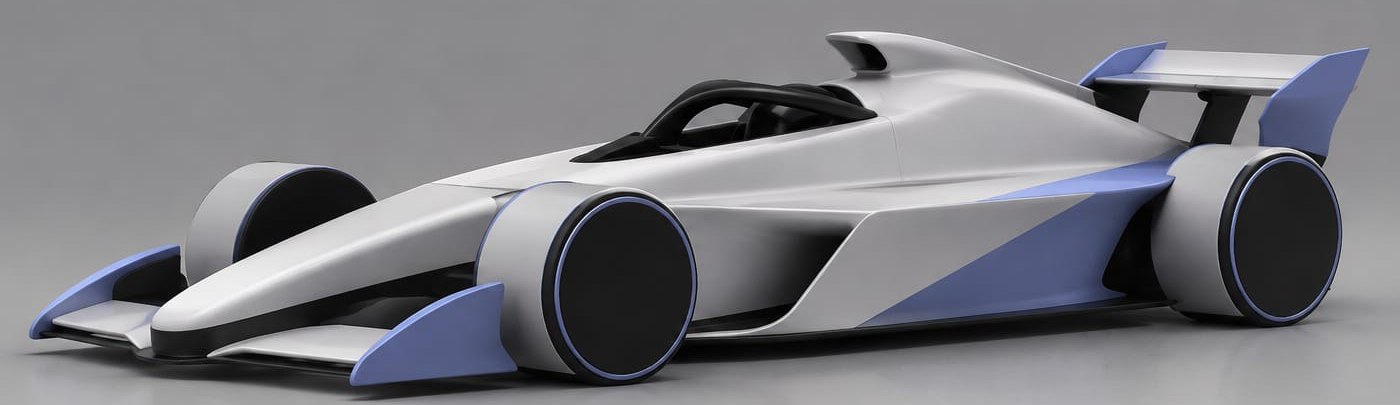
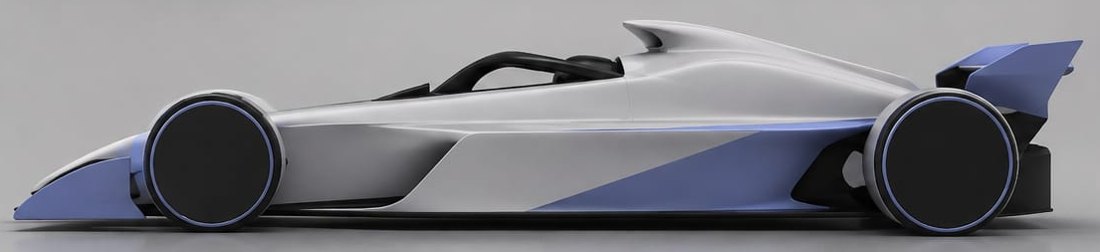
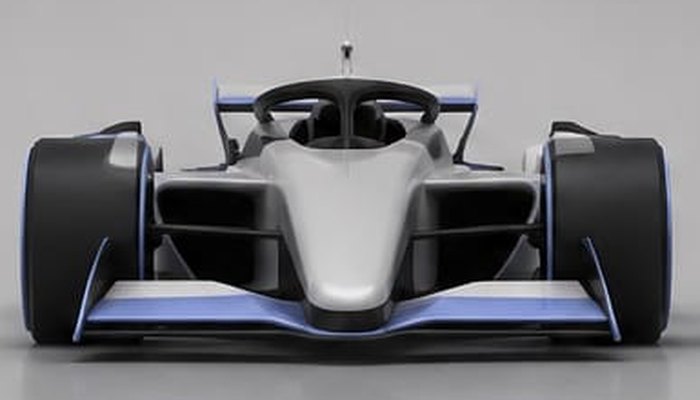
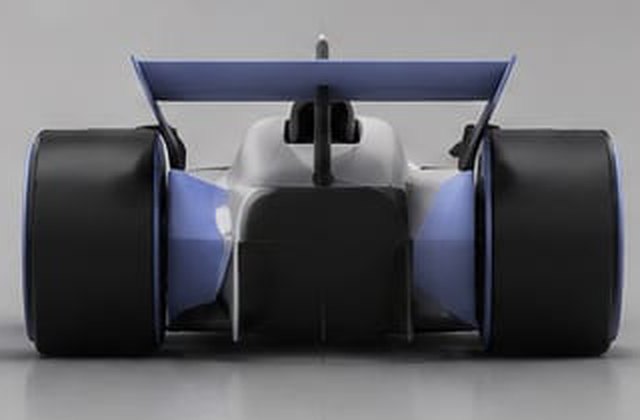
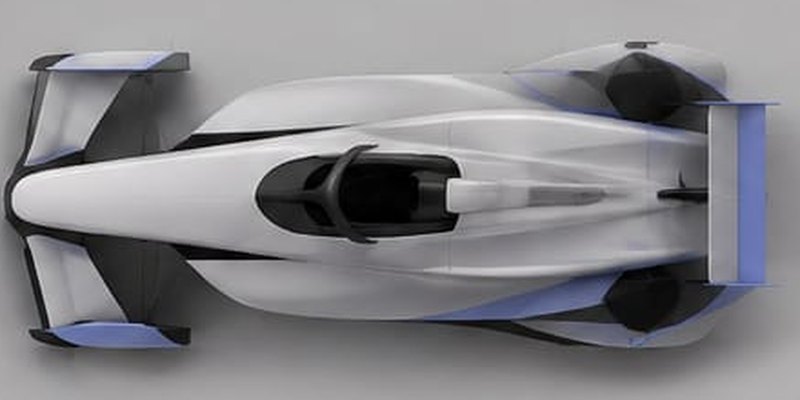
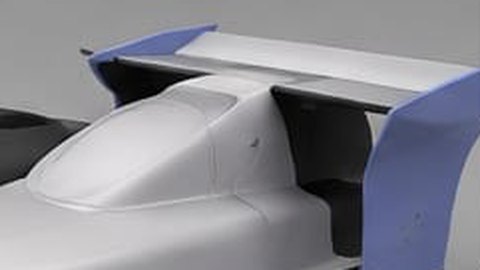
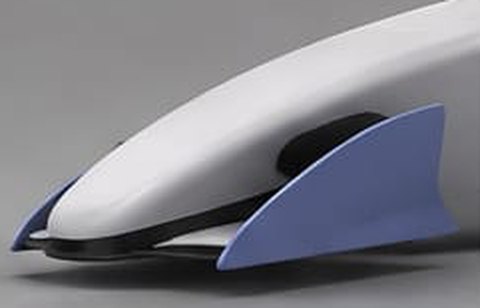
A long, low body in silver with blue accents, a high rear wing and a sculpted nose. Next, the design goes through CFD refinement, printed prototypes and CNC machining.
Anatomy
What every part is for
The diagram shows the layout every STEM Racing car shares, and the job each part does on ours.
- Rear wingKeeps the car stable and pointing straight down the track. It is also one of the largest surfaces for livery and partner branding.
- CO₂ chamberHolds the single 8 g cartridge. At the start the launch pod pierces it, and the escaping gas is the only thrust the car ever gets.
- BodyMachined from a single block. Thrust is fixed, so every gram removed and every square millimetre of frontal area cut is speed gained.
- Wheels and axlesRolling resistance and alignment decide whether the car runs true along its line or scrubs speed fighting it.
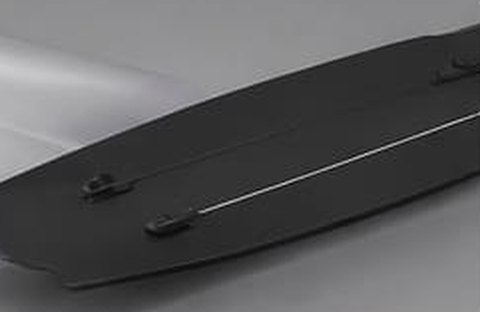
- Tether guidesThe car runs along a line stretched down the track. The guides keep it attached with as little friction as possible.
- Front wing and noseThe first part to meet the air. It sets up the flow over everything behind it.
The physics
One equation runs the race
Newton's second law, with every force on the car written out. The thrust term is fixed by the cartridge, so the only levers we control are the ones that cost speed.
m dv/dt = T(t) − ½ρCdAv² − μrmg
- T(t)
- Thrust from the CO₂. A short, falling pulse we cannot change.
- ½ρCdAv²
- Aerodynamic drag. Grows with the square of speed, so it dominates the back half of the track. We attack Cd (shape) and A (frontal area).
- μrmg
- Rolling and tether friction. Small, constant, and paid for the whole run.
- m
- Mass. Less of it means more acceleration from the same thrust, down to the regulation minimum.
Spec sheet
What we can tell you now
| Power | Single 8 g CO₂ cartridge |
|---|---|
| Race distance | 20 m |
| Class | STEM Racing India, Professional |
| Design | Autodesk Fusion 360 |
| Simulation | Ansys CFD |
| Prototyping | In-house 3D printing |
| Body | CNC-machined |
| Design status | Finalised 12 November 2026 |
| Mass · length · drag | Published after testing |
Engineering
From block to grid
Every design decision moves through the same loop: model it, test it virtually, make it, test it for real, and feed what we learn back into the model.
Research
Regulations, past winning designs and the physics of a CO₂-launched car over 20 m.
Rulebook · literatureDesign
Parametric CAD of body, wings and wheels, so one change updates the whole car.
Fusion 360Simulate
CFD runs compare drag and flow on every iteration before anything is made.
AnsysPrototype
Fast printed parts check fit, assembly and wheel alignment between iterations.
3D printingManufacture
The final body is CNC-machined, finished and painted in the team livery.
CNC machiningRace
Measured runs check the simulation against reality. Then the regional finals.
Feb 2027
Follow the build
Watch it take shape
Every CAD revision, CFD run and machined part goes into the build log with a date on it.